
Mountains
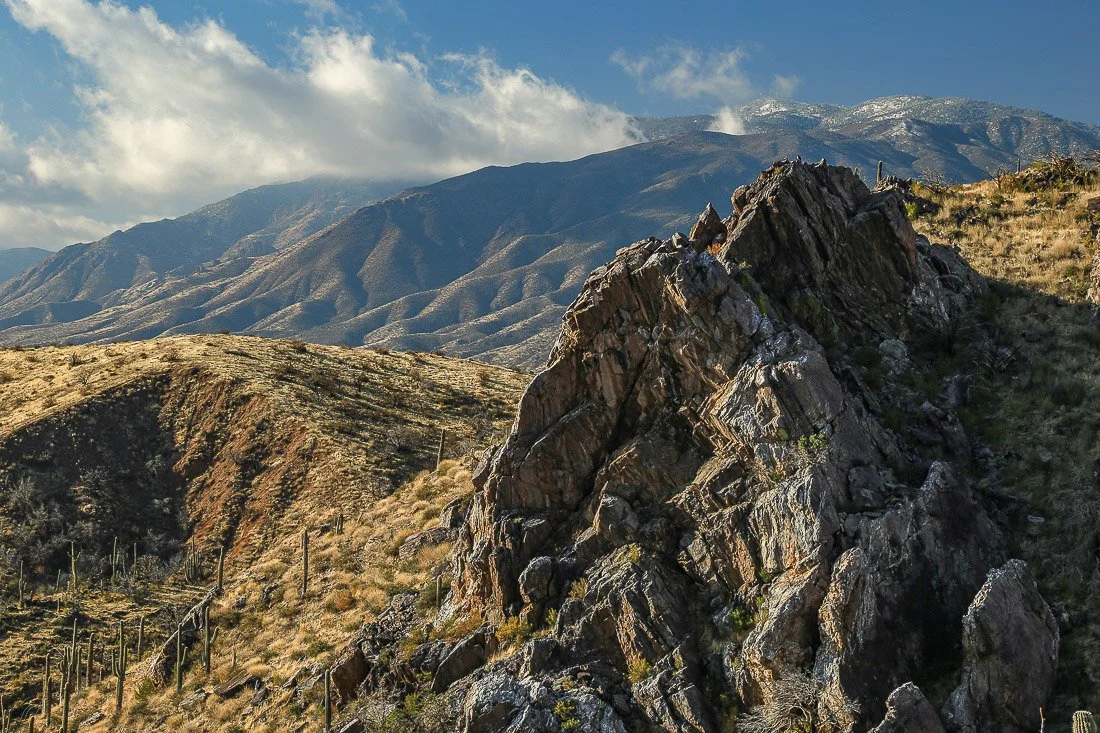
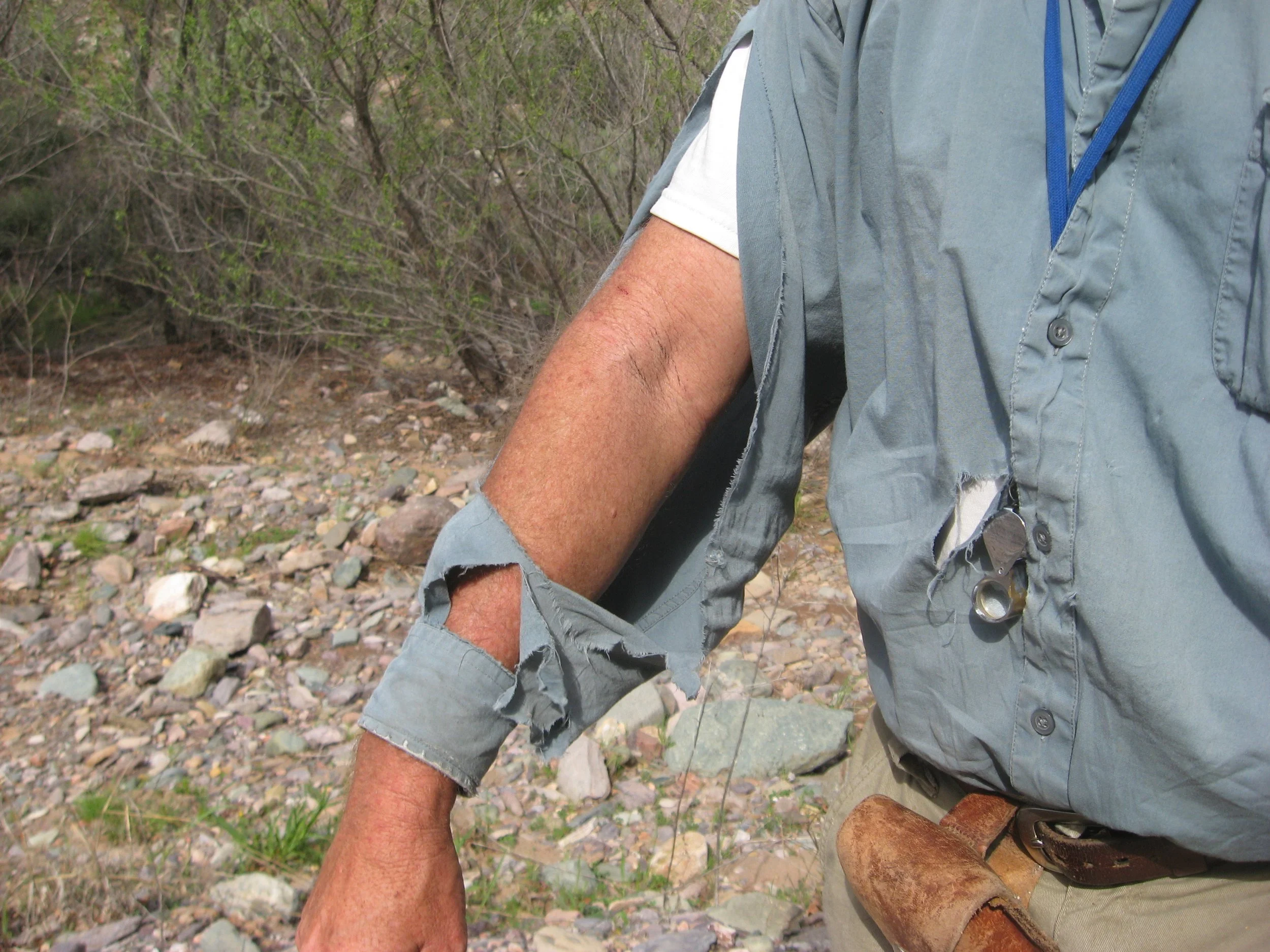
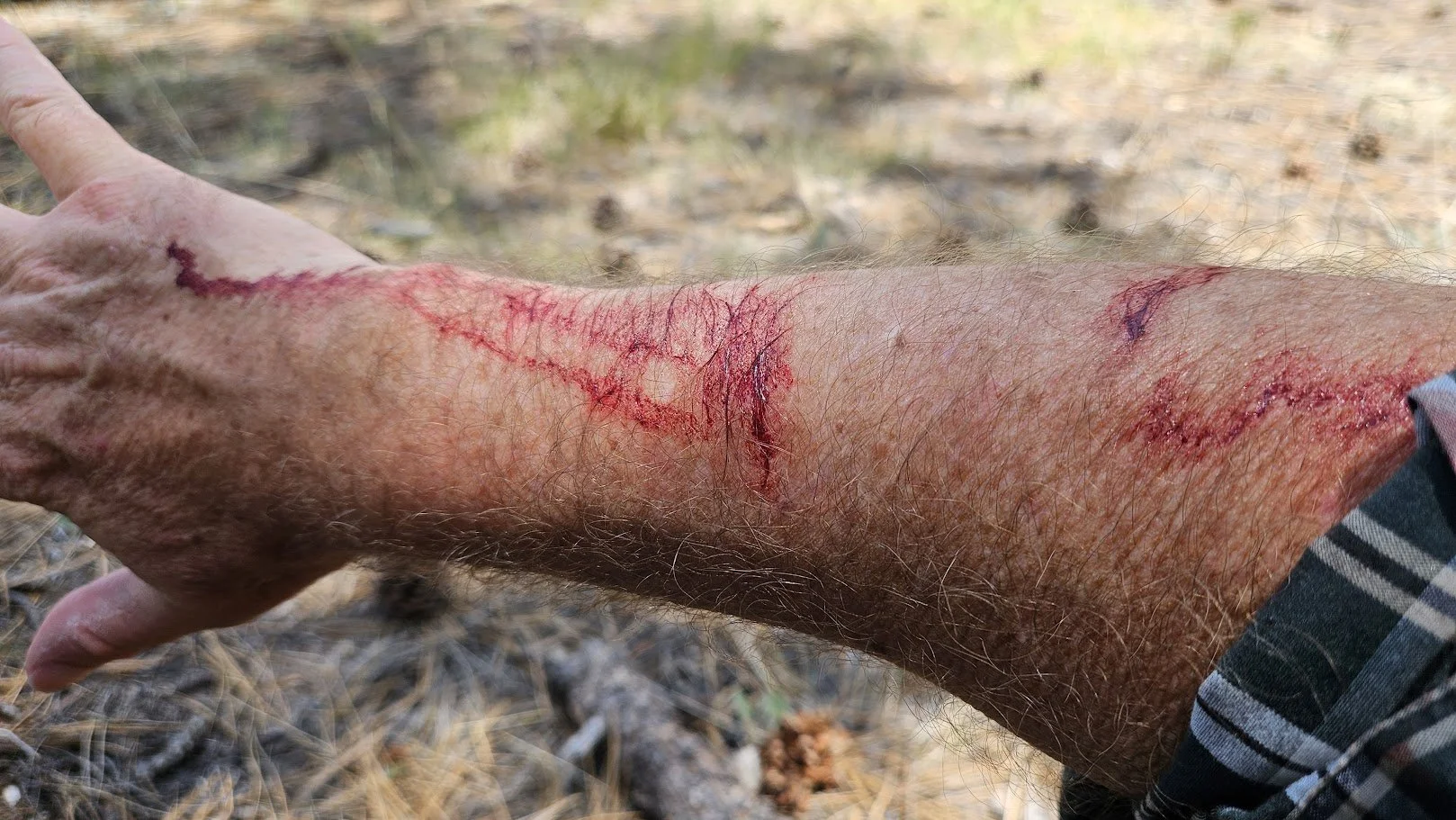
In the arid Southwest, mountains are very important. They collect clouds and trap and store rainfall, releasing it slowly, like natural water tanks. Mountains also provide shelter and habitat for numerous creatures that can’t survive on the hot desert floor. Many of the mountainous areas in central Arizona are covered with chaparral vegetation—a dense, impenetrable thicket of brushy vegetation that is nearly impossible to walk through and regenerates quickly after a fire (see the map and link to the right). Chaparral commonly grades downslope into nasty thickets of catclaw and thorny desert plants, and grades upslope into forests. My greatest challenge to taking photos in the mountains is the great difficulty in slogging through these impenetrable thickets. Quite a few of my shirts have been ripped to shreds, and my arms and legs covered in cuts and punctures. Because many mountains form backdrops to desert, forest, or aerial scenes, many of my images from mountains were placed on those pages.
CLICK ON ANY IMAGE TO VIEW SIZES, PRICES, AND BUY
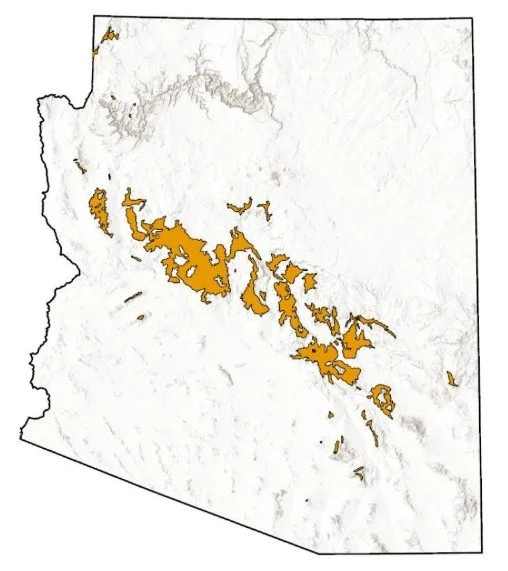
Distribution of chaparral vegetation, from the Arizona Fish and Game Dept.
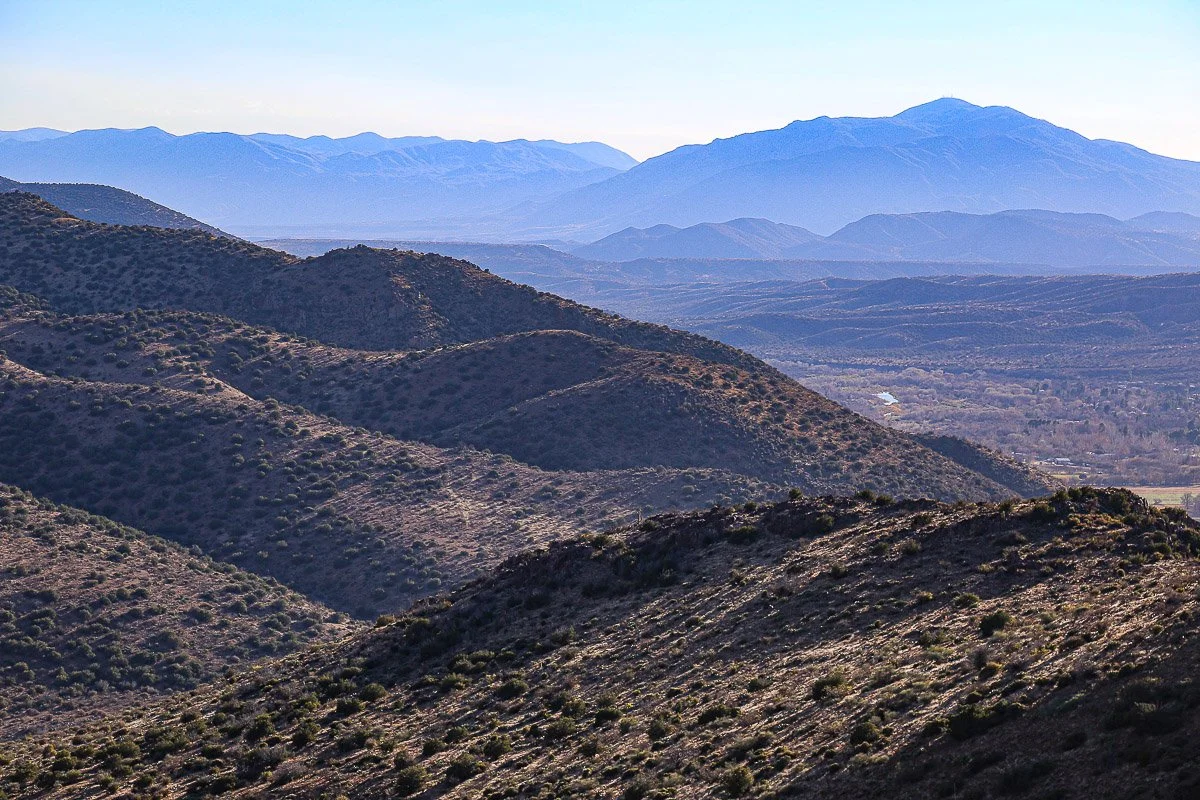
Rows of purple mountains from Hells Gate, east of Gisela.
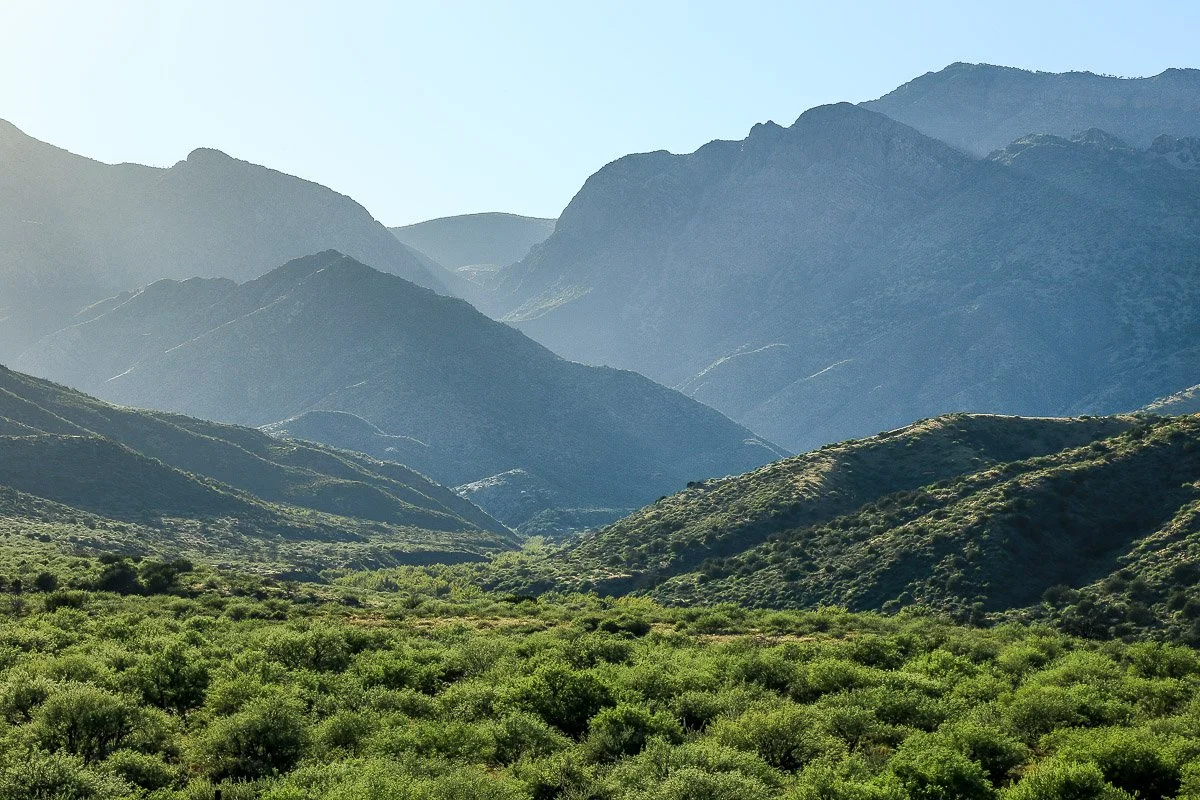
Rays of sunlight bathe the deep and impenetrable Deer Creek Canyon in the Mazatzal Mountains.
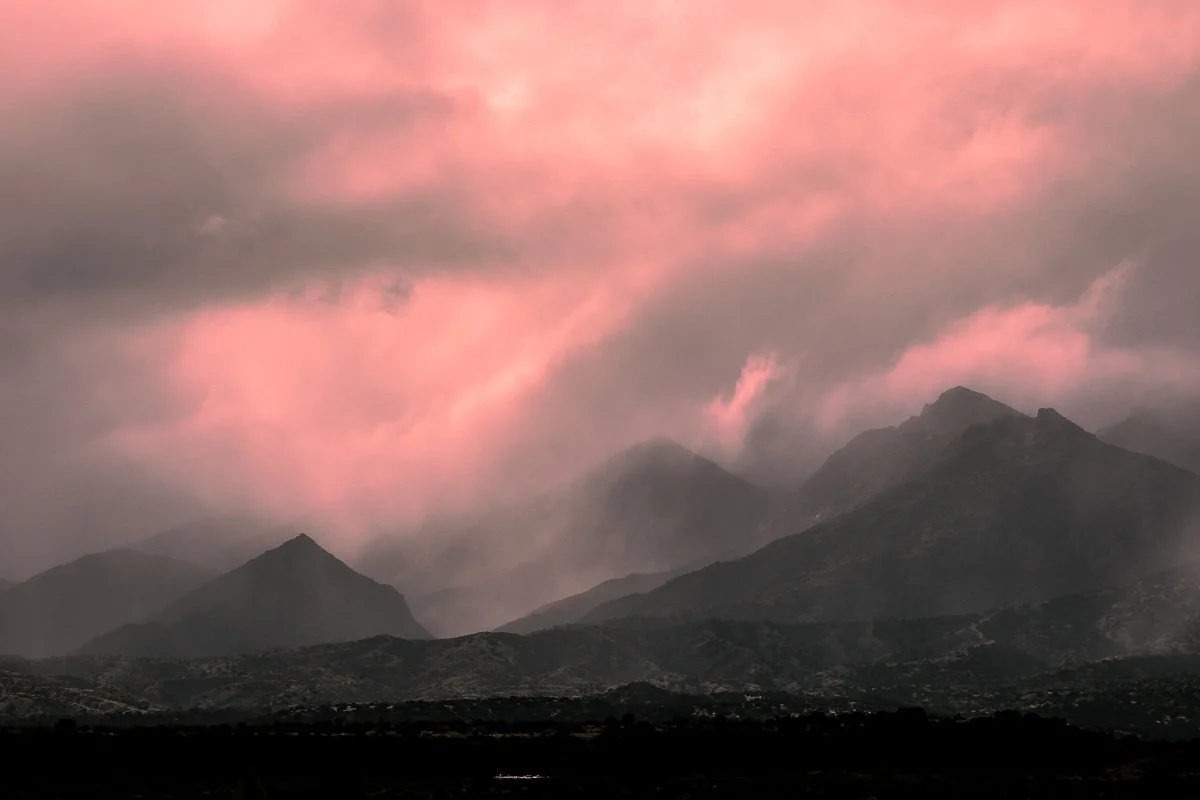
Wild pink storm clouds in the rugged northern Mazatzal Mountains.
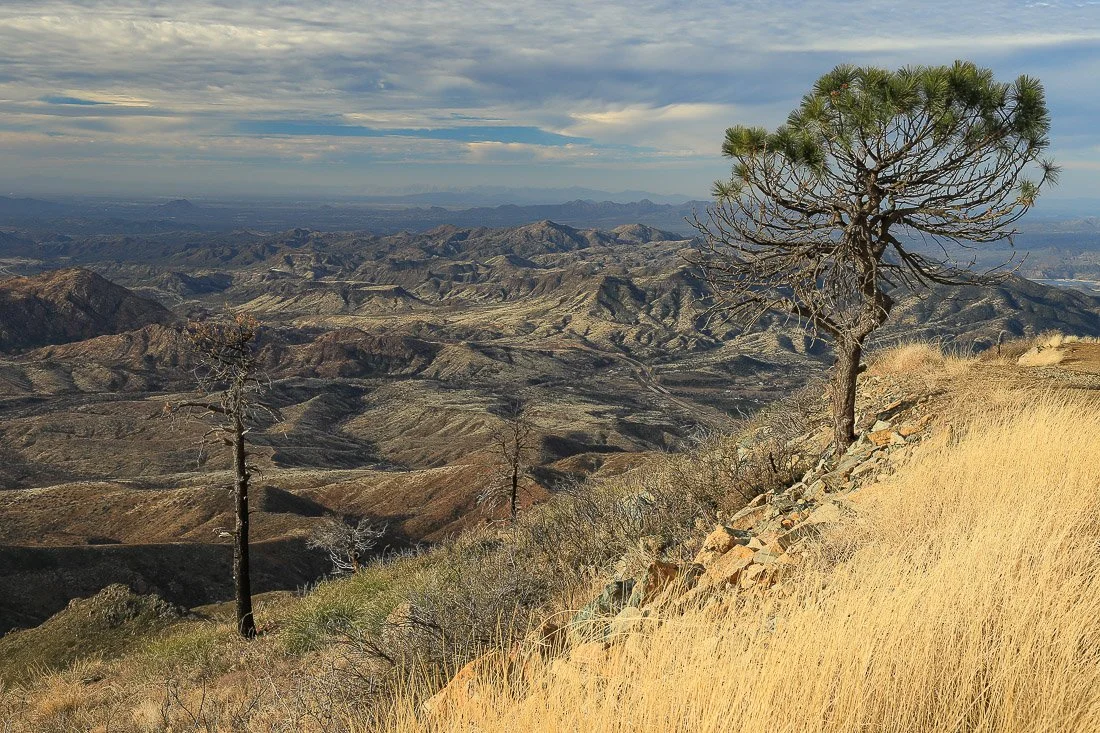
A lone pine tree overlooks the rugged terrain west of Mount Ord.
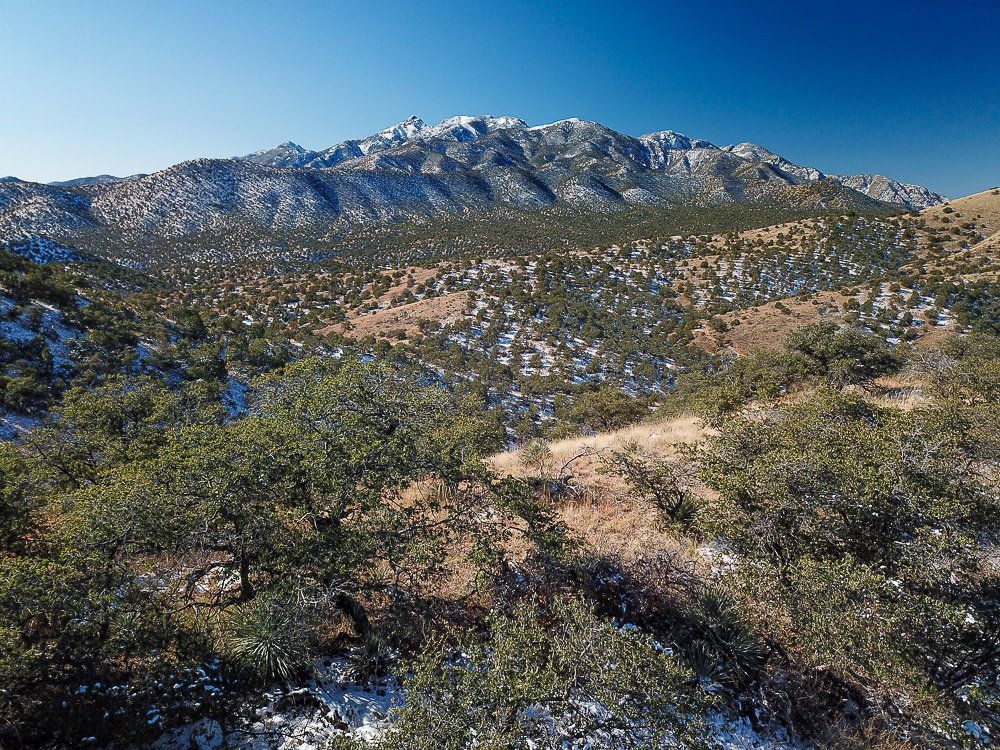
Serene oak woodland in the Santa Rita Mountains the day after a winter storm.
A mass of folded quartzite juts skyward north of Mount Ord.
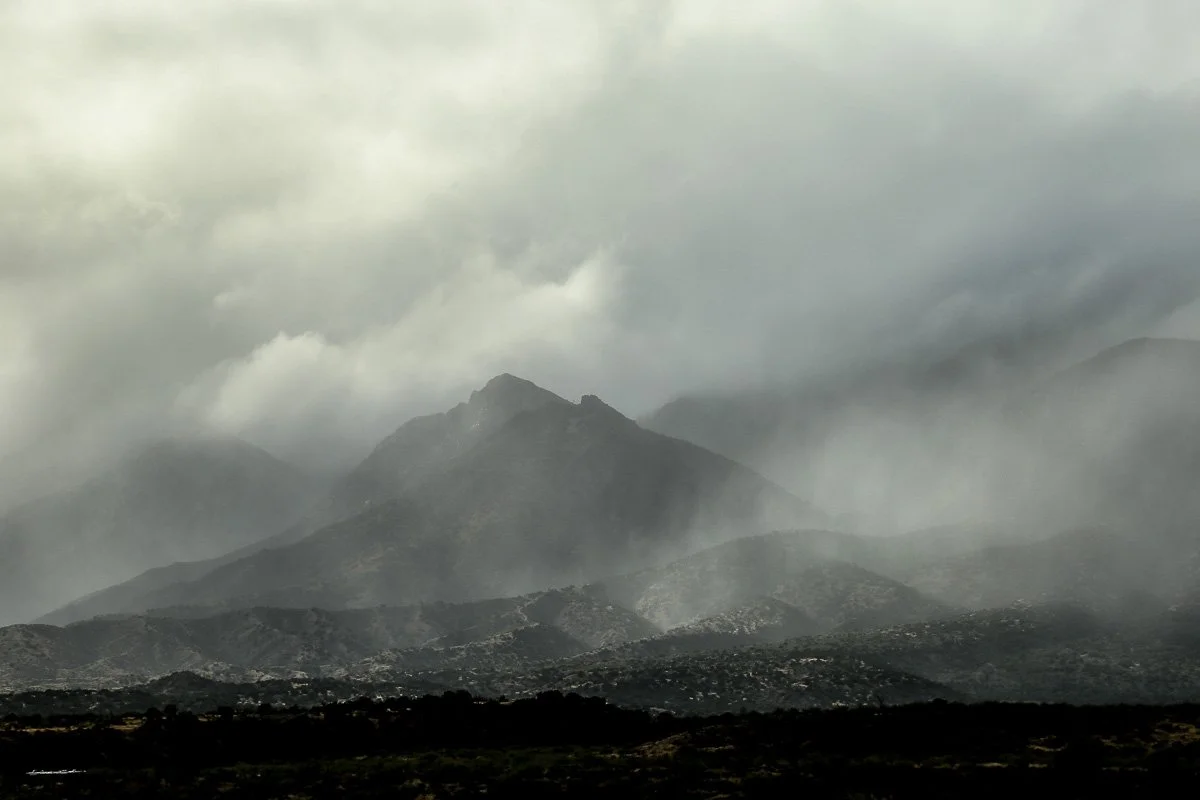
Storm clouds cloak sharp peaks in the northern Mazatzal Mountains.
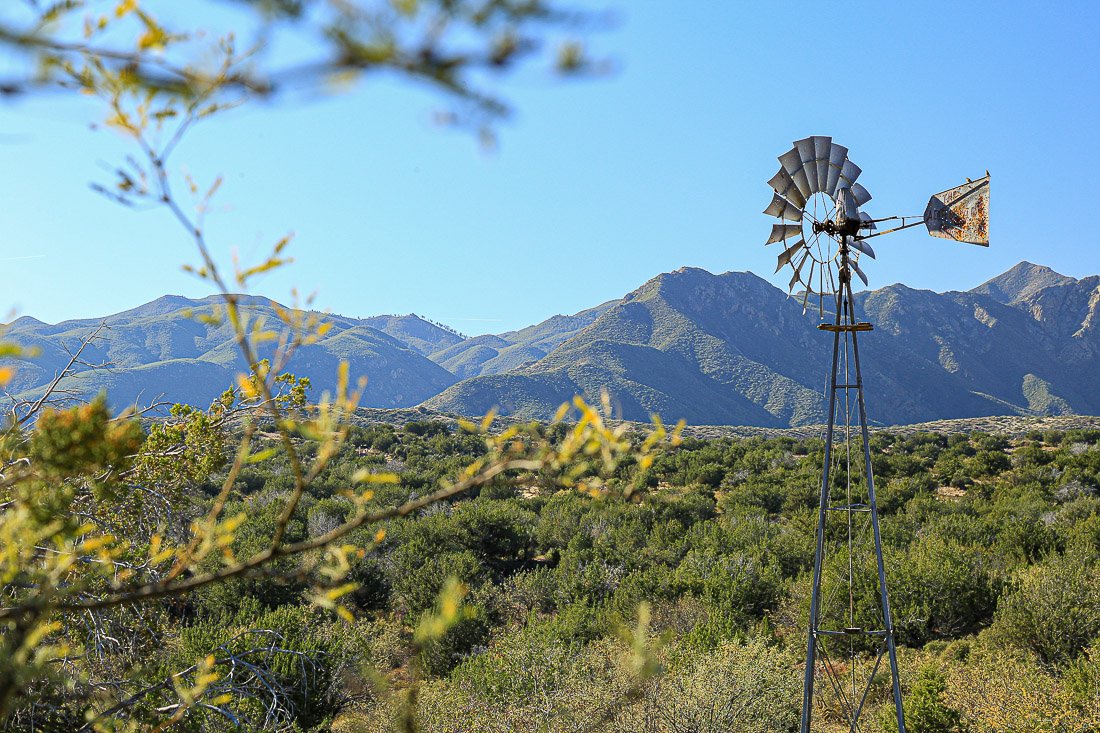
A lonely windmill rises in front of rugged ridges in the central Mazatzal Mountains.
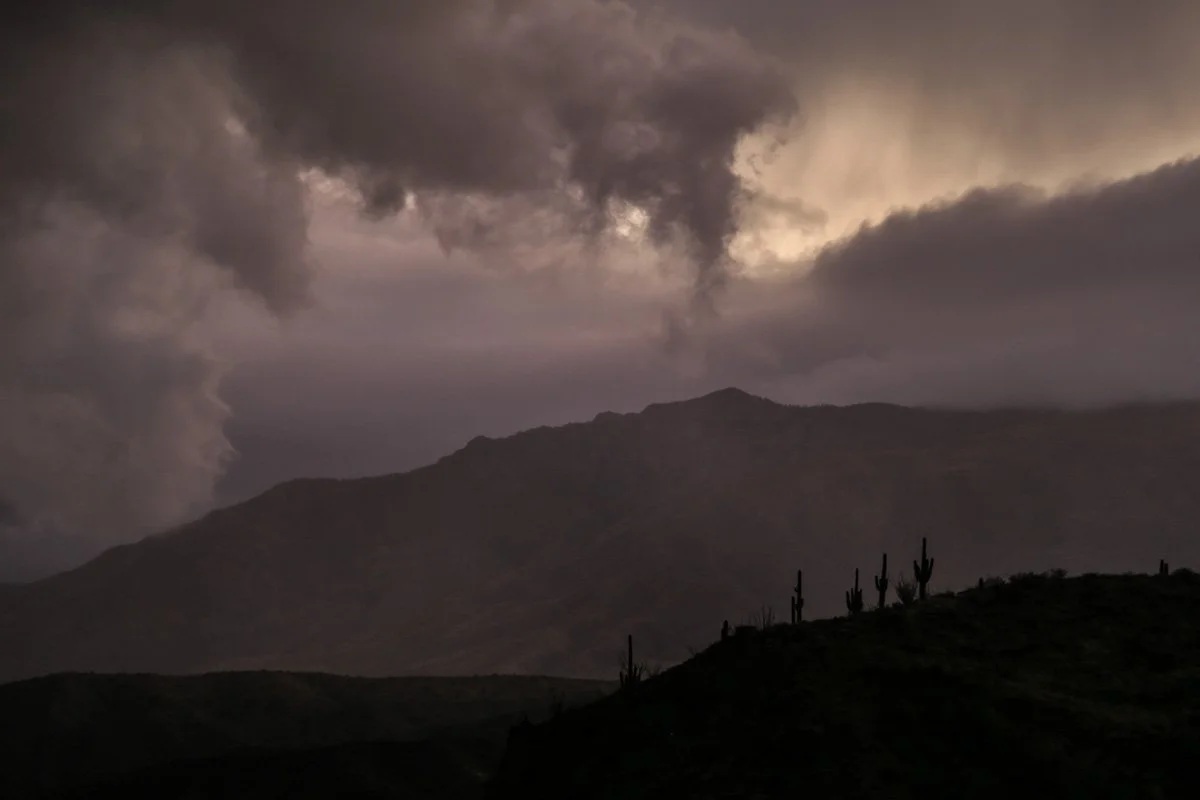
Massive dark storm clouds shrink saguaros.